

Table of contents
Warehouses are busy, fast-moving environments where a wide range of processes take place simultaneously, from goods intake and storage to order fulfilment and quality control. Keeping employees safe is therefore a central concern for any business. In this guide, you will find out which areas carry the greatest risk and how to reduce hazards as part of a robust approach to warehouse health and safety.
What hazards can occur in the warehouse?
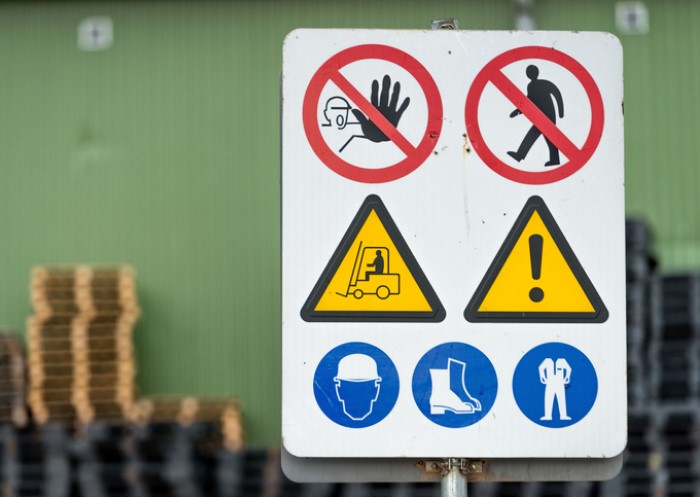
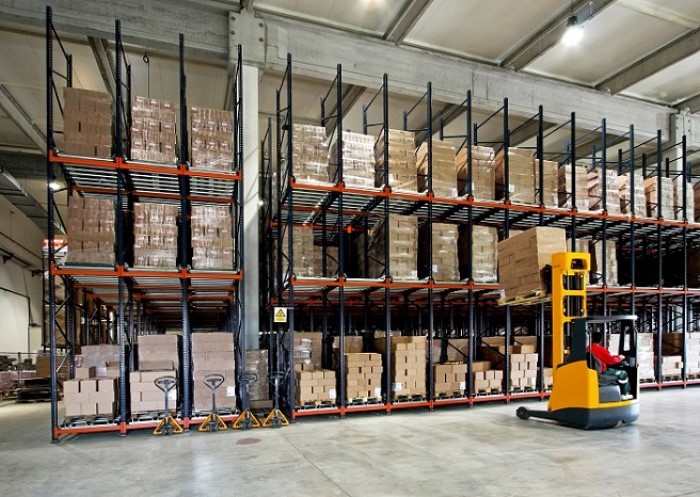
Warehouses are among the workplaces with the highest rates of accidents. This is largely because many areas carry an elevated safety risk – for example, when transporting pallets with stacker trucks or pallet trucks, when palletising, or when retrieving goods from the top shelf. In narrow-aisle warehouses, pedestrian access is generally prohibited due to high risk of accidents, which is why pedestrian access to these areas must be clearly restricted and signposted.
According to the British Safety Council report on forklift safety, 1300 UK workers are hospitalised with serious injuries every year following forklift accidents. In 2019/2020, the Health and Safety Executive (HSE) found that the percentage of non-fatal injuries in transportation and storage was higher than in any other industry, with loading docks highlighted as a particularly high-risk area.
The greatest risks involve:
- Industrial trucks and material transport machines
- Racking, pallets and shelving systems
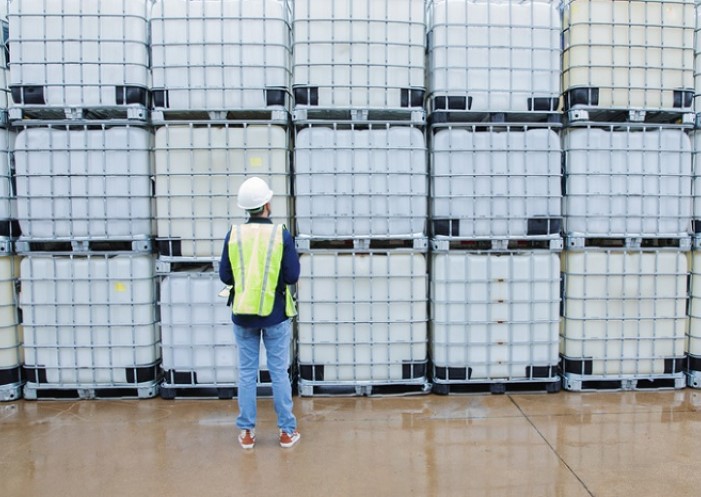
- Storage containers and packaging (drums, lattice boxes, canisters, etc.)
The most common causes of accidents in these areas are:
- Injuries caused by falling goods
- Collisions with industrial trucks or running over feet
- Poor ladder and stepladder safety, including falling off them
- Physical strain injuries (back and knee problems)
Even an overview this brief underlines how central warehouse health and safety is – both in the planning and set-up of a warehouse and in day-to-day operations.Hazard sources found in the warehouse
Hazard sources found in the warehouse
The table below provides an overview of the types of hazards that can arise when working in a warehouse.
| Hazard | Examples |
|---|---|
| Flammable or explosive hazards | • Transport of dangerous goods • Improper storage of lithium-ion batteries • Storing hazardous materials • Use of chemicals • Gas-powered equipment and plants |
| Electrical hazards | • Charging stations, e.g. for charging lithium-ion batteries • Short circuit of lighting in the workplace • Defective electrical cables and connectors |
| Mechanical hazards | • Industrial trucks • Lack of protective clothing • Lifting equipment • Conveyor belts • Power tools • Confined spaces, e.g. in narrow-aisle warehouses • Inadequate secured moving parts • Slippery or sharp-edged surfaces • Racking, shelving and pallets • Ramps, ladders and stairs |
Warehouse risk assessments: The foundation of a sound safety plan
A warehouse risk assessment is a legal requirement under the Health and Safety at Work Act. A comprehensive warehouse safety plan should be developed as early as the warehouse planning stage and must cover all aspects of daily operation. This includes:
- The layout and set-up of the warehouse
- The selection of appropriate equipment and machinery
- The coordination and optimisation of workflows
- The training and equipping of employees
The foundation of your safety plan is a risk assessment of the site. This involves examining all workstations, furnishings, machinery, vehicles and traffic routes for possible hazards and assessing them according to a consistent standard. The physical and mental wellbeing of your workforce must also be considered.
Automated processes and modern technical solutions can reduce hazards in the warehouse. Consult with an expert external service provider for a tailor-made assessment and advice on safety in your warehouse.
The STOP principle
The next step is to use the STOP principle (Substitution, Technology, Organisation, Personal) to determine, for each hazard, how safety can be improved. To achieve this, work through the following questions:
- Can you eliminate the specific process/machine/raw material or replace it with a safer alternative? (Substitution)
- Can the risk be reduced through a technical or structural change? (Technical measures)
- Can a change in the workflows provide more security? (Organisational measures)
- Are employees and visitors better protected against the hazard by wearing specific personal protective equipment? (Personal measures)
The order of the STOP principle should not be changed. You must always identify the safest possible process, piece of equipment or method for completing a task before resorting to technical or organisational measures.
Warehouse safety tips: Seven ways to reduce hazards
What practical steps and concrete measures can you take to improve warehouse health and safety? We have compiled the most important safety tips for accident prevention in the guide below:
- Racking and shelving systems
The most important factors for safety around racking and shelving systems are load capacity and structural stability. Ensure that approved shelf and bay loads do not exceed their limits and that loads are evenly distributed. If the racking is heavily loaded but there is still space available, consider increasing storage capacity with industrial shelving.
Commercially used racking is subject to mandatory inspection. This means that storage racking, especially heavy-duty racking, must be assessed regularly through routine safety checks. - Sufficient space for industrial trucks
Space is a critical factor in the safe operation of forklifts and pallet trucks. Ensure that the aisles have sufficient space for driving and manoeuvring and that the minimum clearance distances from racking are observed. If you are setting up a new warehouse from scratch, you should first determine the necessary aisle width before planning your racking layout.
Impact protection and anti-collision guards can prevent racking from tipping over in the event of driving errors.They can also be used to separate pedestrian and vehicle traffic routes and therefore improve warehouse health and safety for all personnel navigating the warehouse on foot. - Regular inspection and maintenance industrial trucks
Always ensure that only fully functional industrial trucks are in use. In addition to the correct operation of pallet trucks and forklifts, regular vehicle inspections and daily visual and functional vehicle checks are essential aspects of vehicle health and safety. You can address minor defects yourself through routine forklift maintenance and pallet truck repairs to ensure that safe, fully operational trucks are always available.
- Realistic time management reduces the risk of accidents
Unrealistic timeline expectations, for example, while picking or packing products, can result in employees making mistakes, which can create safety risks. Plan enough time for all the necessary work steps. Modern picking technologies such as pick-by-vision or pick-by-watch, as well as effective storage, racking and shelving equipment, can help you to complete tasks safely and on time.
- Warehouse safety training for employees
Never underestimate the impact that a lack of knowledge or inattention among employees can have on accident rates in the warehouse.
It is vital that all employees receive regular warehouse safety training – for example, on driving a forklift safely, the proper use of equipment and tools, or how to behave in specific hazardous situations such as working alone. - Employee equipment and working conditions
Ensuring and implementing optimal working conditions is also crucial for maintaining warehouse health and safety. This means that all employees should be able to carry out their tasks in a safe way with full concentration and without unnecessary risk to their health. Consider the following measures to reduce potential hazards in the warehouse:
• Set up ergonomically designed workstations that allow employees to alternate between sitting and standing
• Adjust workload and recovery times appropriately
• Reduce physical strain through the automation of warehouse processes
• Adapt personal protective equipment (PPE) in line with findings from the risk assessment. - Management responsibilities for business owners
Finally, as a business owner or manager, you play a critical role in setting the tone for your team and for the overall well-being of your staff. After all. what good are all the rules and regulations if you as a leader do not follow them? Lead by example and make sure you personally comply with all warehouse health and safety measures and requirements!
What legislation governs warehouse health and safety regulations?
A number of key pieces of legislation govern warehouse health and safety regulations. The following key laws set out general provisions on workplace safety and the protection of employees:
- Health and Safety at Work Act
- Manual Handling Operations Regulations
- Control of Substances Hazardous to Health (COSHH)
- Lifting Operations and Lifting Equipment Regulations (LOLER)
In addition, there are numerous specific standards and regulations covering areas such as the operation of industrial trucks and the use of storage racking, for example.
- BS EN 15635 fixed steel shelving systems, application and maintenance of storage equipment
- BS EN 15512 Fixed steel shelving systems, adjustable pallet racking
- BS EN 528 Storage and retrieval equipment and machines, safety requirements
If you are not sure which warehouse health and safety regulations apply to you, you can find out more on the HSE website.
FAQ for warehouse health and safety
Statistics from the British Safety Council report that 1300 UK workers are hospitalised every year as a result of forklift accidents. Transportation and storage jobs consistently rank higher than many other industries for the number of non-fatal accidents that occur.
The greatest risks include:
• Industrial trucks and material transport machines
• Racking, pallets and shelving systems
• Storage containers and packaging (drums, lattice boxes, canisters, etc.)
The most common causes of accidents in the warehouse are:
• Injuries caused by falling transport or storage goods
• Collisions with industrial trucks or vehicles running over feet
• Falls from ladders and steps
• Physical strain injuries (back and knee problems)
In principle, company management is responsible for ensuring maximum safety in the warehouse. A comprehensive safety plan should be created during warehouse planning that covers all aspects of daily work. This includes:
• The layout and set-up of the warehouse
• The selection of appropriate tools and machinery
• The coordination and optimisation of workflows
• The onboarding and training of employees
As a basis for a safety plan, you must first carry out a risk assessment in the warehouse. This involves examining all workstations, fixtures, machinery, vehicles and traffic routes for potential hazards and assessing them against a consistent standard. The physical and mental wellbeing of your workforce must also be taken into account.
Please note: The regulations mentioned here are only a selection of the most important legal requirements. For detailed information, please refer to the collections of regulations and legal texts listed and, where applicable, other reliable sources on the topic. When in doubt, consult experts on the specific implementation in your company.
Image source:
© gettyimages.de – Geber86